Household · Sponsored
The grout line that outlasted the weekend: what a cordless spin scrubber is actually for
By Helen Marrow · Home desk · Updated October 1, 2026 · This is an advertorial. Modern Foundry Daily is paid when a reader continues to the seller.
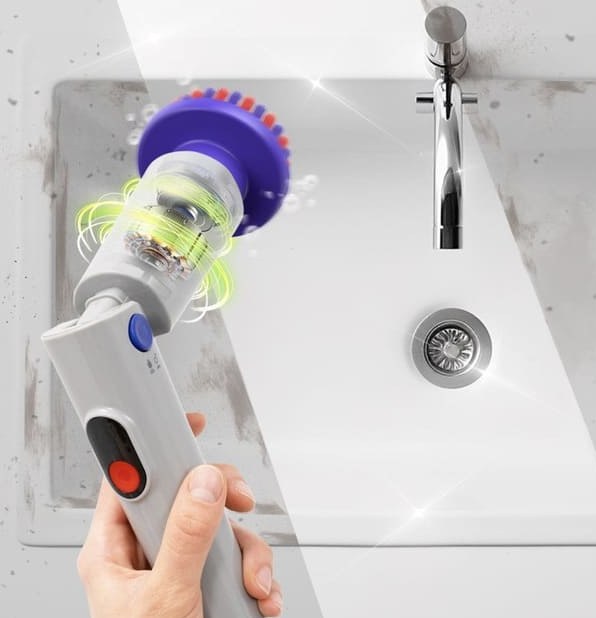
A grout line does not care how organized the closet is. It collects soap film, kitchen splash, and the gray that shows up after a season of shoes. The home desk has been reading seller pages for cordless spin scrubbers — handheld tools with a rotating brush, a rechargeable pack, and a short list of swap-on heads — because readers keep asking whether the category is a gadget or a stand-in for a Saturday on their knees.
This report looks at one model in that category: the Synoshi Power Spin Scrubber, sold through the brand’s offer page. It is a small cordless electric scrubber. It is not a steam cleaner, not a whole-house system, and not a promise that a bathroom will look new. The useful question is narrower. Can a spinning head take over some of the repetitive brushing on tile, a sink rim, a tub edge, or a stovetop, so a person is guiding the tool instead of bearing down with a sponge?
Guide the head. Do not expect the machine to invent a clean surface the soil will not leave.
What the seller lists
Seller pages describe Synoshi as a lightweight L-shaped handheld with a rotating brush, more than one head for different surfaces, a rechargeable battery charged by USB-C, and a body rated to handle splashes. Figures published across seller sites do not all match — battery capacity, run time, and weight are listed differently depending on the page — so this desk treats them as seller figures, not as a test we ran.
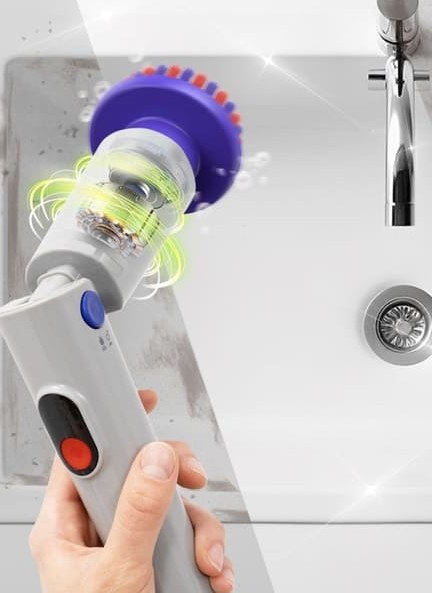
A typical listing includes the handle, at least one round brush, and a charging cable. Some pages mention extra pads or a second head sold separately. Angle adjustments are advertised so the head can tilt toward a floor, a wall, or the underside of a rim. Waterproof language on seller sites usually means splash resistance in a shower or at a sink, not a license to drop the handle in a bucket. If a page says not to submerge the body, follow that page.
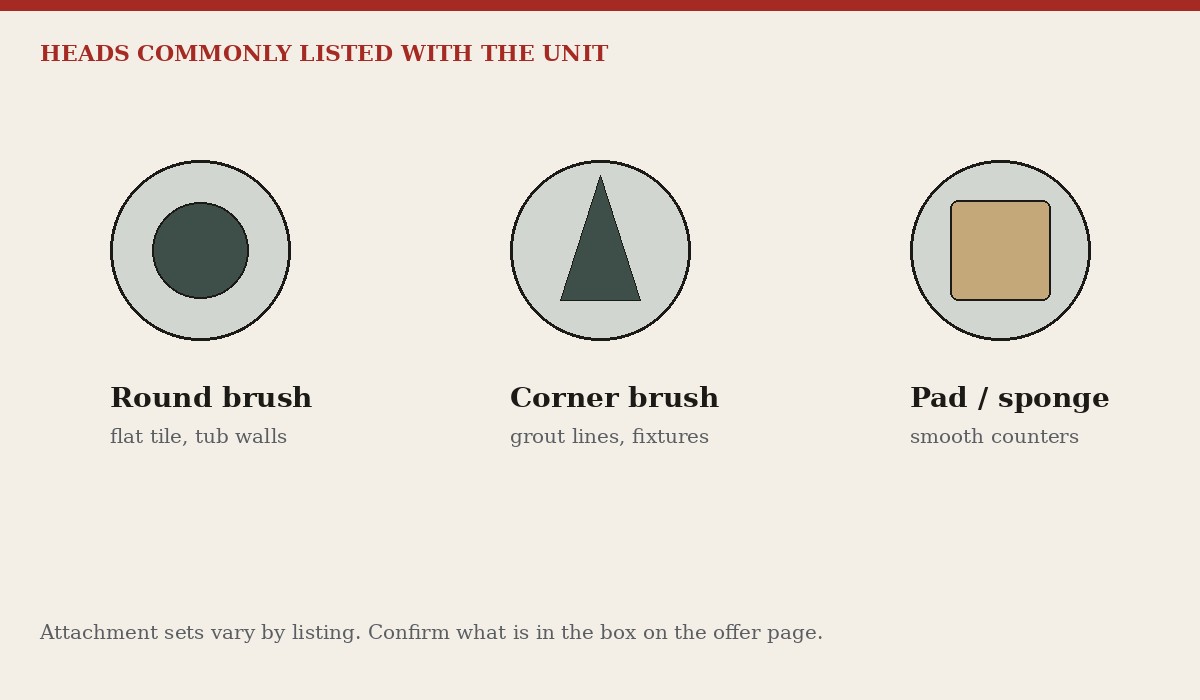
Where it fits, and where it does not
Spin scrubbers are built for film and buildup a brush can reach: soap scum on ceramic, splash on a backsplash, dust in a garage corner, the rim of a sink. They are a poor match for anything the seller did not name. Loose grit on a delicate finish can scratch if the head is too stiff. Mold that has a smell, a soft wall, or a leak behind the tile is a repair problem, not a brush problem. This page does not claim the tool removes mold, kills germs, or replaces a cleaner you already trust.
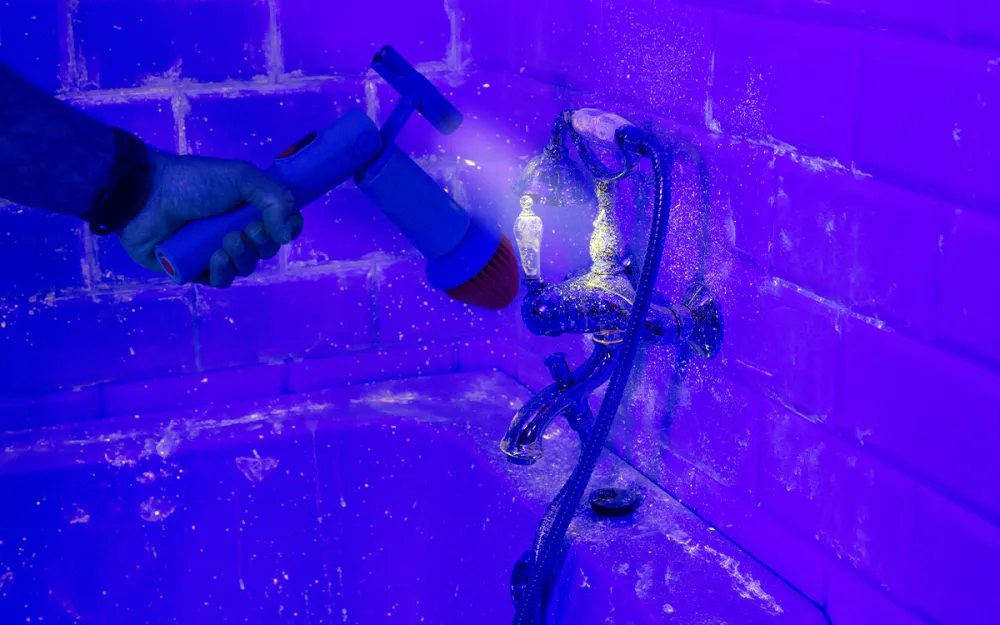
Run time is the practical limit. Seller pages cite anything from about 45 minutes to a couple of hours on a charge. Plan on one room, not a whole house, until you have used the battery you actually receive. Charging is described as USB-C. Keep the port dry before you plug it in.
Seller figures, labeled as such
| Form | Cordless handheld spin scrubber |
| Power | Seller listings cite a small motor, often around 10W. Not independently measured here. |
| Charge | USB-C, per seller pages |
| Run time | Seller pages disagree (about 45 minutes on some, longer on others). Expect variation. |
| Water | Splash-resistant use is advertised. Do not assume the handle can be submerged. |
| Heads | Interchangeable brushes; kit contents differ by offer |
| Weight | Seller pages describe it as light, often a few hundred grams. Confirm on the listing. |
No price is stated here. Offers, shipping, and return windows change. Read them on the seller page.
Advertorial link. Opens the seller’s page. Availability is not guaranteed.
Letters to the desk
Reader notes below are campaign-style comments for this advertorial. They are not verified purchases, not a star rating, and not a survey. Experiences differ.